How to Start a Vape Shop: Costs, Licenses & Supplier Guide (2026)
The U.S. e-cigarette and vape market was valued at $8.98 billion in 2022, according to Grand View Research, which projects strong growth through 2030. But here's the catch: in a University of Southern California study that tracked 77 Southern California vape shops, 44% closed within two and a half years (Galimov et al., Tobacco Regulatory Science, 2020). Not because demand isn't there. Because the regulatory burden catches owners off guard, and one compliance mistake can wipe out months of profit.
This guide covers how to start a vape shop in 2026 -- from PMTA compliance to finding wholesale suppliers who actually ship authentic products. If you're looking at a broader product mix that includes tobacco, glass, and CBD, check out our guide to opening a smoke shop. This article focuses specifically on the vape-only model.
Vape Shop vs. Smoke Shop: Key Differences
These two businesses look similar from the outside. They're not.
A smoke shop carries a wide inventory -- cigarettes, cigars, glass pipes, rolling papers, CBD, vapes, and accessories. That diversity spreads risk across categories but requires more startup capital and floor space. A vape shop, by contrast, runs a tighter operation: devices, e-liquids, disposables, coils, and accessories. Narrower product mix, smaller footprint, lower initial inventory cost.
But the tradeoff is regulation. Vape products face stricter federal and state oversight than most traditional tobacco products. The FDA's premarket tobacco product application (PMTA) process means that many e-liquid brands and devices are technically unauthorized for sale. Selling non-PMTA-authorized products isn't automatically illegal at the retail level in most states, but enforcement is tightening. Smart vape shop owners pay attention to which products have active PMTA submissions and which ones don't.
Margins tell an interesting story too. Disposable vapes typically carry 40-60% retail markup. Premium e-liquids run 50-70%. Mods and tanks land around 30-45%. Compare that to cigarettes at 15-25% margin in a smoke shop. On a per-dollar-invested basis, vape inventory often outperforms a general smoke shop inventory -- but only if you're stocking products that actually move.
The customer base is different too. Vape shop customers tend to be younger (21-40), more brand-loyal, and more likely to return weekly for coils and juice. They expect staff who can explain the difference between a pod system and a box mod. Product knowledge isn't optional here -- it's your competitive edge.
Startup Costs for a Vape Shop
A vape-only shop typically costs less to open than a full smoke shop because you need less floor space and a narrower inventory. But "less" doesn't mean "cheap."
Small market, 600-800 sq ft: $35,000-$55,000
Mid-range market, 800-1,200 sq ft: $55,000-$90,000
Competitive urban market, 1,200+ sq ft: $90,000-$130,000
Here's where it goes:
Lease and deposits: $4,500-$12,000. First month, last month, plus security deposit. Vape shops can work in smaller spaces than general smoke shops, which keeps rent lower. A 700 sq ft unit in a strip mall is plenty for a well-designed vape store.
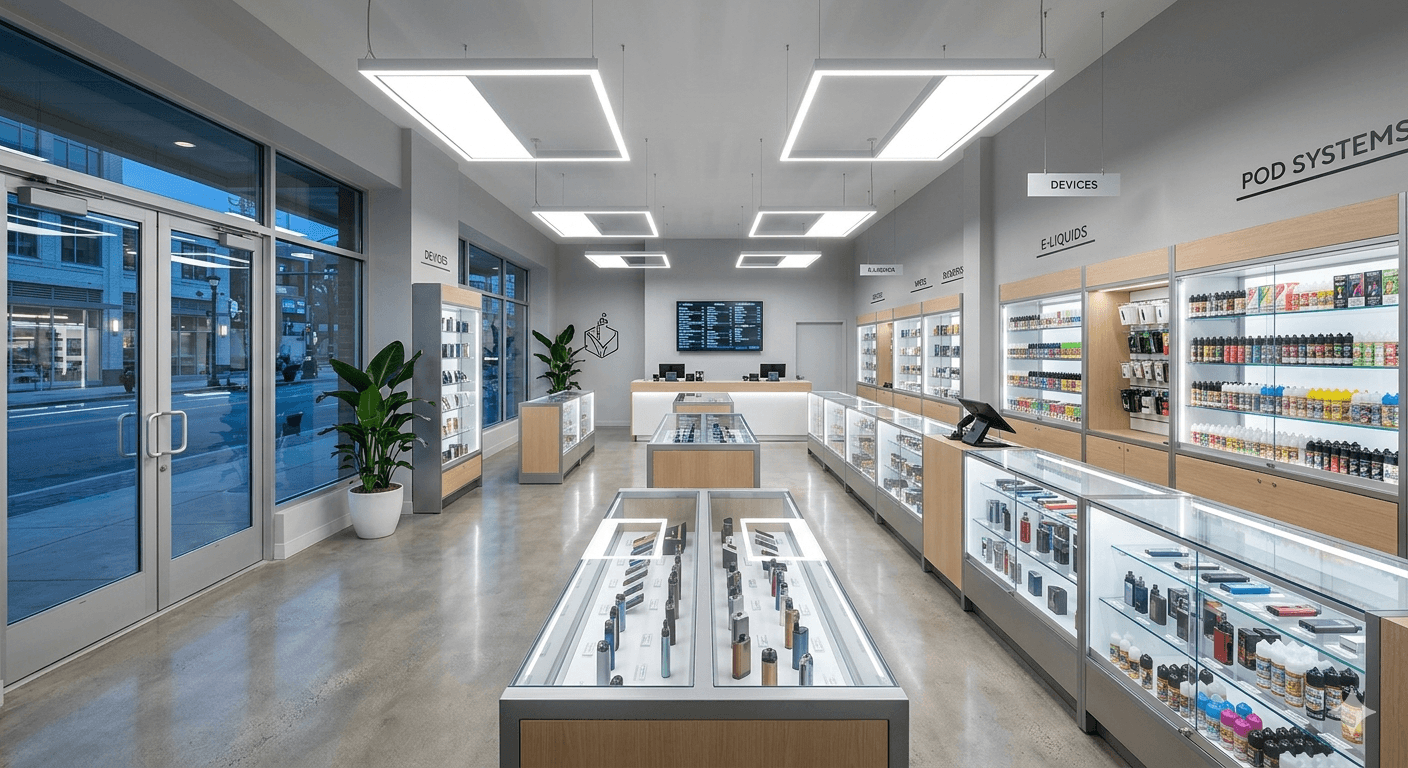
Build-out and fixtures: $8,000-$22,000. Display cases for devices ($2,000-$5,000), wall-mounted e-liquid shelving ($1,000-$3,000), lighting ($800-$2,000), countertop testing stations if your state allows sampling ($500-$1,500), POS system ($500-$1,500), signage ($1,500-$3,500), and security cameras ($1,200-$2,500). Spend the money on clean, modern displays. Vape customers care about aesthetics more than your average tobacco buyer.
Initial inventory: $10,000-$30,000. This is lower than a smoke shop because you're stocking fewer categories. Plan roughly: 35% disposable vapes, 25% devices and kits, 25% e-liquids, and 15% accessories (coils, batteries, chargers, cases). Stock popular brands wide rather than deep -- carry 8-10 brands with moderate depth rather than 3 brands with massive quantities.
Licensing and legal: $1,500-$6,000. Varies by state, and vape-specific fees can add up (more on this below).
Insurance: $1,000-$2,500/year. General liability is mandatory. Product liability coverage is smart given the regulatory climate around vape products.
Working capital: $8,000-$15,000. Three to four months of fixed expenses. Vape shops typically hit positive cash flow faster than smoke shops because turnover is quicker, but don't count on that.
Marketing launch: $1,500-$4,000. Grand opening, Google Business Profile setup, initial social media content.
Licensing Requirements for a Vape Shop
Here's something that surprises first-time vape shop owners: the federal government treats vape products as tobacco products. Every regulation that applies to tobacco retailers applies to you -- plus some extra ones.
Federal: FDA tobacco retailer registration. Free to file, mandatory to operate. You must register before you open. The FDA considers e-cigarettes, e-liquids, and all vaping products to be "deemed" tobacco products under the Tobacco Control Act. This isn't optional.
Federal: PACT Act compliance. The Prevent All Cigarette Trafficking Act was amended in 2021 to cover electronic nicotine delivery systems (ENDS). If you sell online or ship products across state lines, you must register with the ATF and comply with state tax reporting requirements. For a brick-and-mortar-only shop, the PACT Act is less of a concern -- but know it exists in case you ever add an online store.
State tobacco/vape retailer licenses. Most states roll vape products into their existing tobacco retailer license. Costs range from nothing (Michigan, Missouri, and Tennessee don't license retail tobacco) or $10 in Georgia up to $450/year in California and $984/year in Oregon. A few states — including Texas — require a separate vape-specific permit. Check your state's requirements carefully:
- California requires a tobacco retail license at $450/year (as of July 1, 2026) -- see our California license requirements guide for details
- Texas has a relatively straightforward process -- Texas license guide
- Florida's tobacco dealer permit is required for vape sales -- Florida license guide
- New York's licensing is among the most complex, with a statewide flavor ban and NYC density caps -- New York license guide
Local permits. General business license, sales tax permit, Certificate of Occupancy, fire inspection. Some cities have enacted vape-specific ordinances including flavor bans (like the ones in Massachusetts and parts of California) or additional display restrictions. Check your city's municipal code before you commit to a location.
PMTA awareness. The FDA requires manufacturers to submit PMTAs before marketing new tobacco products, including vapes. As of early 2026, only a handful of products have received marketing granted orders . Most products on the market are in regulatory limbo -- either under review, denied, or never submitted. As a retailer, you're not directly liable for manufacturer PMTA compliance in most states, but stocking products with denied PMTAs is increasingly risky. Pay attention to FDA enforcement actions and prioritize suppliers who carry brands with active PMTA submissions.
Age verification. Federal law sets the minimum purchase age at 21. Every state enforces this, and penalties for selling to underage customers are severe -- fines start at $11,000 for a first federal offense and can include losing your retail license. Use electronic age verification at the register, not just visual ID checks.
Timeline: Budget 6-10 weeks for licensing. Vape-specific requirements can add a couple of weeks compared to a standard tobacco retail application.
Choosing the Right Location
Vape shops can succeed in smaller spaces than smoke shops. You don't need room for a walk-in humidor or walls of glass pieces. A tight, well-designed 700-900 sq ft space works well.
What matters most for a vape shop location:
Proximity to your customer base. Vape customers skew younger than general smoke shop customers. Locations near college campuses, downtown areas with nightlife, gyms, or apartment complexes with younger demographics tend to outperform suburban strip malls.
Visibility, but not necessarily high-rent frontage. Vape shop customers are often destination shoppers -- they know where you are and come specifically to you. You still want decent signage visibility, but you don't need the priciest corner unit. A second-tier spot in a good area often beats a premium spot in a mediocre one.
Lease costs. For a 700-900 sq ft space, expect $1,800-$4,000/month depending on the market. Push for a 2-year lease with a renewal option. Shorter leases give you flexibility if the location doesn't perform.
Zoning checks. Before you sign anything, confirm with your city's planning department that a vape/tobacco retail business is permitted at that address. Some cities have buffer zones (500-1,000 feet) around schools, parks, and churches. A few have density caps on tobacco retail licenses per neighborhood.
Parking and access. Quick in, quick out. Your customers are making 5-10 minute stops. If parking is a pain, you'll lose repeat business to whoever is more convenient.
Here's a counterintuitive point: being near another vape shop isn't always bad. Clusters of similar businesses can actually drive more foot traffic to an area. If the competitor is poorly run -- dirty store, no product knowledge, limited selection -- opening nearby with a better experience can work in your favor. Customers will compare, and they'll pick you.
Building Your Vape Shop Inventory
Your inventory decisions are simpler than a general smoke shop's, but the stakes per SKU are higher. With a narrower product range, each product line needs to pull its weight.
Disposable vapes (35% of inventory budget). These are your highest-velocity items. They bring customers through the door and drive daily revenue. Stock 10-15 brands across multiple nicotine strengths and flavor profiles. Prioritize brands with wide consumer recognition and -- critically -- brands with active PMTA submissions or marketing granted orders. Browse disposable vape wholesale suppliers to compare brand availability and pricing across distributors.
Devices and starter kits (25%). Pod systems, pen-style vapes, and box mods. Pod systems dominate for new vapers. Box mods serve your enthusiast crowd. Carry 2-3 trusted brands in each segment rather than one of everything. Popular devices drive coil and accessory sales, so think of each device as a platform that generates ongoing revenue.
E-liquids (25%). Bottled e-liquids for refillable devices. Stock a range of nicotine strengths (0mg, 3mg, 6mg, plus nicotine salt options at 25mg and 50mg). Flavor variety matters -- fruits, desserts, menthol, and tobacco flavors should all be represented. Start with 15-20 brands and narrow based on what sells. Margins here are strong (50-70% markup), making e-liquids your most profitable category by percentage. Check flavor ban status in your state before ordering -- some jurisdictions restrict flavored e-liquids.
Accessories (15%). Replacement coils, pods, batteries, chargers, drip tips, carrying cases, and cleaning supplies. These are low-cost, high-margin repeat purchases. Every device you sell should have its compatible accessories in stock. Nothing kills customer trust faster than selling someone a device and not carrying the coils for it.
What NOT to stock (at least initially). Resist the urge to add CBD, glass pipes, or tobacco products in your first six months. Each category adds regulatory complexity, supplier relationships, and display space requirements. Get the core vape business running profitably first. You can always expand later.
Finding Wholesale Vape Suppliers
The vape wholesale market has a serious authenticity problem. Counterfeit disposables are widespread, and selling fakes exposes you to customer complaints, potential liability, and FDA enforcement action. Your supplier choice matters more in vape than in almost any other smoke shop category.
What to look for:
Authenticity guarantees. Your supplier should provide verification codes, batch tracking, or direct brand authorization for every product they ship. If they can't tell you exactly where their inventory comes from, walk away.
PMTA awareness. Good vape distributors know which of their products have PMTA submissions and which don't. Ask. If the rep doesn't know what a PMTA is, that's a red flag.
Consistent stock levels. Vape customers are brand-loyal. If you're out of their preferred disposable or juice, they'll go somewhere else -- and they might not come back. Choose suppliers with reliable fill rates on your top sellers.
Competitive minimums. For a new shop, look for suppliers with $200-$500 minimums so you can test products without overcommitting. Some distributors offer new-store programs with lower minimums and introductory pricing.
You can browse verified wholesale vape suppliers and filter by category, location, and product type. For vape hardware specifically, look for distributors who carry major brands with authorized reseller agreements.
Build relationships with 3-5 suppliers. Don't put all your purchasing with one distributor. Spread it across a few to ensure backup supply, competitive pricing, and access to different brand portfolios. But don't spread too thin either -- volume with fewer suppliers gives you better leverage on pricing and payment terms.
Payment terms. Most vape distributors require prepayment for your first 2-3 orders. After that, you can often negotiate net-15 or net-30 terms. This makes a real difference for cash flow once you're running.
For more detail on vetting distributors and negotiating wholesale accounts, read our guide to finding wholesale suppliers for your shop.
Marketing Your Vape Shop Without Paid Ads
Here's the reality: Google, Meta, TikTok, and most major ad platforms prohibit paid advertising for vape and tobacco products. You can't buy your way to visibility. That's actually good news for shop owners willing to put in organic marketing work, because your competitors can't outspend you either.
Google Business Profile -- your top priority. This is the single most effective free marketing channel for a vape shop. Claim your listing, fill out every field, upload 20+ photos (storefront, interior, product displays, team), and post updates weekly. Respond to every review. Review count is a gate for shoppers: in BrightLocal's 2026 Local Consumer Review Survey, 47% of consumers said they won't use a business with fewer than 20 reviews — and for a shop that can't buy ads, this profile is often the single biggest driver of new customers.
Local SEO. Get listed in every relevant online directory -- Yelp, Apple Maps, Bing Places, and industry directories like SmokeAxis. Ensure your name, address, and phone number are identical across every listing. Create location pages on your website targeting "[city] vape shop" keywords. Write a blog post or two about local vaping regulations in your state. Search engines reward locally relevant content.
Social media -- organic only. Instagram is your best platform. Post new product arrivals, cloud-chasing clips (where legal to show), store aesthetics, and customer shoutouts. Use local hashtags. Instagram's rules prohibit promoting tobacco/vape sales directly, so frame your content around the lifestyle and community, not "buy this product." TikTok works similarly -- entertaining content about the shop experience, not product ads.
Word of mouth and referrals. Your best marketing channel is a customer who tells their friends about you. A referral program (bring a friend, you both get 10% off) costs almost nothing and drives high-quality leads. Vape communities are tight-knit. Get three or four vocal customers talking about your shop and the network effect takes over.
Loyalty programs. Digital loyalty programs (apps like Square Loyalty or a simple points system in your POS) drive repeat visits. Offer a reward for every $100 spent or every 10th purchase. Repeat customers spend 67% more than new ones — a finding from BIA/Kelsey and Manta's 2014 survey of nearly 1,000 small-business owners that retention marketing has leaned on ever since. Retention beats acquisition for vape shops every time.
Local partnerships. Partner with nearby businesses for cross-promotions. A barber shop, tattoo parlor, or gym with an overlapping demographic can send traffic your way in exchange for the same.
FAQ
How much does it cost to start a vape shop?
Plan for $35,000-$130,000 depending on your market and store size. A lean operation in a smaller market can launch around $35,000-$55,000, while a competitive urban location with a full buildout runs $90,000-$130,000. Initial inventory ($10,000-$30,000) and working capital reserves ($8,000-$15,000) are the biggest line items after your lease.
Is a vape shop more profitable than a smoke shop?
On a per-square-foot basis, typically yes. Vape shops operate in smaller spaces with lower rent, and vape products carry higher average margins (40-70%) compared to cigarettes and traditional tobacco (15-25%). However, smoke shops benefit from category diversification -- if one product category slows down, others pick up the slack. For scale: smoke shops sold on BizBuySell between 2021 and 2025 — the marketplace class vape shops trade under — reported a median of $100,000 in annual owner earnings on $420,000 in revenue.
Do I need a tobacco license to sell vapes?
Yes. The FDA classifies all vaping products as tobacco products, which means you need federal FDA tobacco retailer registration and your state's tobacco retail license. Some states and cities have additional vape-specific permits or restrictions, including flavor bans. See our state-specific licensing guides for detailed requirements.
What's PMTA and why should I care as a retailer?
PMTA stands for Premarket Tobacco Product Application. It's the FDA's process for authorizing new tobacco products (including vapes) for sale. Most vape products on the market haven't received marketing granted orders. As a retailer, you're not the one filing the PMTA, but selling products with denied applications is increasingly risky as FDA enforcement ramps up. Prioritize stocking products from brands with active or granted PMTA submissions.
Can I sell vapes online from my shop?
Technically yes, but it's complicated. The PACT Act requires you to register with the ATF, verify age at purchase AND delivery, use adult-signature-required shipping, and comply with every state's tax reporting requirements for every state you ship to. Major carriers (USPS, UPS, FedEx) have largely stopped shipping vape products to consumers. Some specialty carriers still handle it. For most small vape shops, the compliance cost and logistics make online sales impractical. Focus on your brick-and-mortar business first.
Ready to stock your vape shop with authentic, competitively priced inventory? Browse verified wholesale vape distributors across all product categories, or start with disposable vape suppliers and vape hardware distributors to build your opening order. Your first wholesale account is just a quote request away.