Best Wholesale Vape Distributors in the US (2026)
In many smoke shops, a single popular disposable brand outsells whole product categories. Get your vape supply chain wrong, and you're not just losing margin on one product — you're bleeding money across one of the biggest lines in your business.
Finding reliable wholesale vape distributors is one of the highest-stakes decisions you'll make as a shop owner. The difference between a distributor who ships on time with authentic products and one who sends questionable inventory two weeks late can make or break your quarter.
This guide breaks down exactly what to look for, what questions to ask, and how to separate the serious distributors from the ones who'll waste your time.
What Makes a Good Wholesale Vape Distributor
It's tempting to judge a distributor by price alone. Don't. The cheapest wholesale price on a disposable vape means nothing if you're dealing with inconsistent stock, slow shipping, or products that customers return because they taste off.
The best wholesale vape distributors share a few traits that matter far more than having the lowest per-unit cost.
Product authenticity and compliance. Every device they sell should come with proper authentication codes, batch numbers, and compliance documentation. With the FDA cracking down on unauthorized vape products in 2025 and 2026, working with a distributor who cuts corners on compliance puts your entire business at risk. Fines can start at around $10,000 per violation — that's not a line item you want on your books.
Consistent inventory. Your customers don't care about your supply chain problems. If you're out of stock on their favorite pod system for two weeks, they'll drive to the shop down the street. A good distributor maintains deep inventory on top-selling SKUs and communicates proactively when something's running low.
Responsive support. When you get a damaged shipment or need to process a return, you should be able to reach a real person within 24 hours. Distributors who hide behind contact forms and 72-hour response windows aren't partners — they're liabilities.
Competitive minimums. Some distributors require $2,500 or $5,000 minimum orders. That works for established shops, but newer retailers need flexibility. Look for distributors who offer case-quantity minimums on individual products rather than massive blanket order minimums.
Key Product Categories You Need to Stock
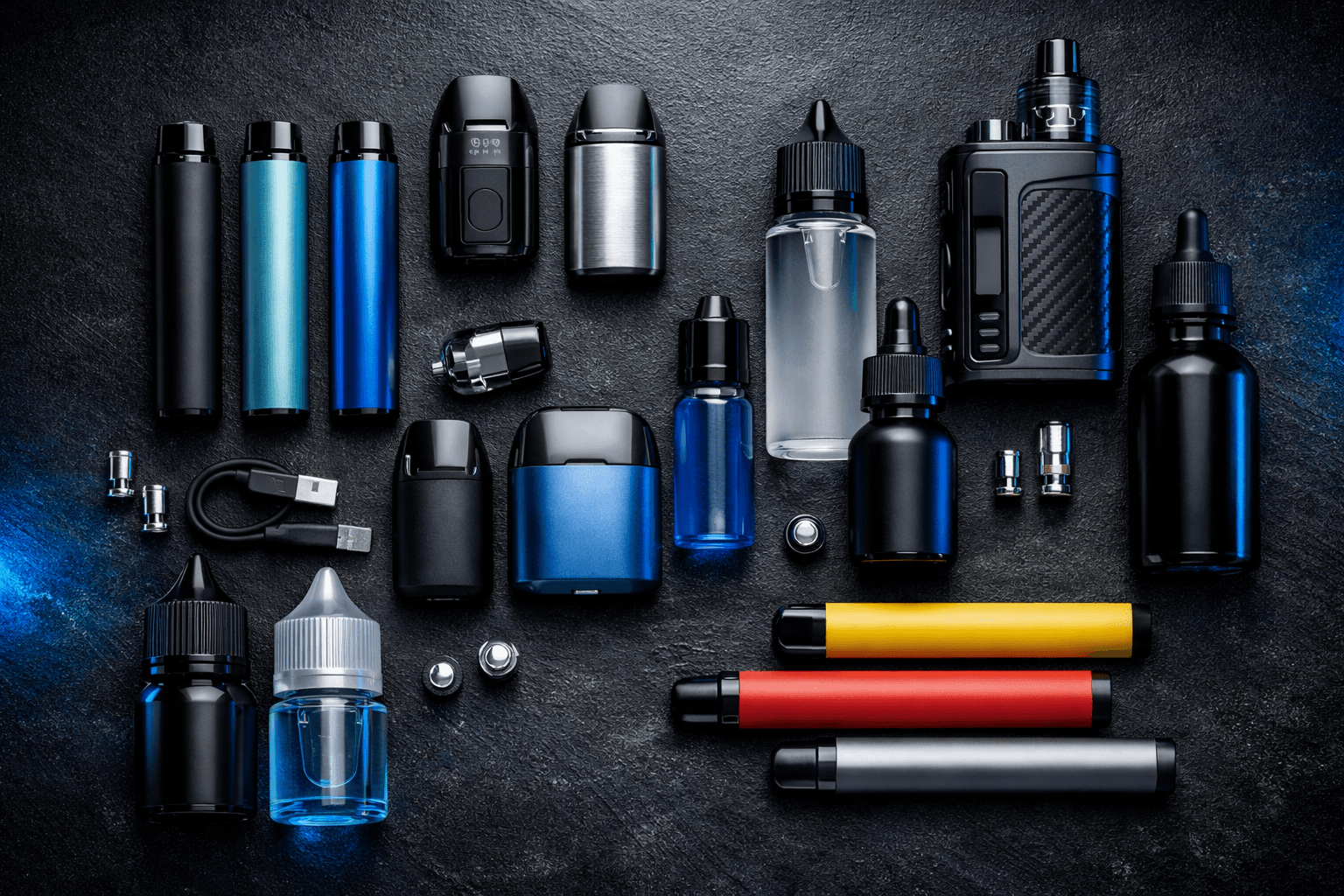
The vape market in 2026 isn't one market. It's several overlapping categories, each with different margins, turnover rates, and customer bases. Your distributor needs to cover the ones that matter for your shop.
Disposable Vapes
This is the volume driver. Disposables account for the bulk of vape sales in most smoke shops, and turnover is fast. At wholesale, you're looking at $3 to $8 per unit depending on brand and puff count. Retail prices range from $12 to $25, which puts your margins somewhere between 40% and 60%.
The catch: disposable brands rise and fall fast. A brand that's selling 200 units a week in January might be dead by June. Your distributor needs to carry the current hot brands, not just the ones that were popular six months ago. Check out disposable vape wholesale suppliers to compare who's carrying the latest SKUs.
Pod Systems and Mods
Pod systems wholesale in the $15 to $30 range, with retail prices between $30 and $55. Margins are thinner than disposables — usually 35% to 45% — but these customers come back repeatedly for replacement pods and coils, which is where the real money is.
Mods and advanced devices are a smaller slice of the market, but they attract dedicated customers who spend more per visit. Wholesale prices for quality mod kits run $20 to $50, with retail markups of 50% or more. Browse vape and e-cigarette wholesalers to find distributors who specialize in hardware.
E-Liquids and Nicotine Salts
Bottles and nic salts are your recurring revenue engine. Wholesale costs range from $4 to $12 per bottle depending on size and brand, with healthy 50% to 65% margins at retail. The key here is variety — your customers have strong flavor preferences, and stocking 30 to 50 flavor options from a few trusted brands beats stocking 10 flavors from a dozen random ones.
Here's a counterintuitive truth: carrying fewer brands can actually increase your margins. When you consolidate your e-liquid orders with two or three distributors instead of spreading thin across eight, you hit higher volume price breaks on each. You can find e-liquid and nic salt distributors who offer tiered volume pricing right on our directory.
What to Ask Before Placing Your First Order
Don't place a wholesale order based on a catalog and a price list. Call the distributor. If they won't get on the phone with you, that tells you something.
Here's what you need to know before you send money:
"What's your return policy on defective products?" Some distributors accept returns within 7 days, others within 30, and some won't take returns at all on opened items. Get this in writing. Defective disposables are an industry-wide issue — you'll encounter them eventually, and you need a clear path to resolution.
"Where do you source your products?" You want authorized distribution partnerships with brands, not gray-market inventory. Ask for brand authorization letters. Legitimate wholesale vape distributors will have these on file and share them without hesitation.
"What's your average shipping time, and do you offer rush options?" Two-day shipping is typically standard from most major distributors. If someone quotes you 7 to 10 business days, they're likely drop-shipping from overseas or running a lean operation that can't keep up with demand.
"Do you offer NET terms or is it prepay only?" Established distributors often offer NET-15 or NET-30 terms to qualified retailers. This is especially valuable when you're stocking up for busy seasons. Prepay-only isn't a dealbreaker, but it does limit your cash flow flexibility.
"What compliance documentation do you provide?" You need PMTA status documentation, state-specific compliance certificates, and age verification protocols for online orders. A distributor who can't produce these documents on request is one you should walk away from.
For a broader look at finding wholesale partners across all smoke shop categories, check out our complete supplier sourcing guide.
How to Compare Wholesale Vape Distributors
Once you've identified three or four potential distributors, comparing them head-to-head gets easier if you focus on the right metrics.
Start with a test order. Don't commit to a $5,000 first purchase with anyone. Place a small order — $500 to $1,000 — across a few product categories. This tells you more about a distributor's reliability than any sales pitch. Time how long it takes from order placement to delivery. Check the packaging quality. Inspect every product for authentication codes.
Then compare on what actually affects your bottom line. Price per unit matters, obviously, but factor in shipping costs. A distributor who's $0.50 cheaper per unit but charges $150 for freight might not actually be saving you anything versus one who offers free shipping on orders over $750.
Look at catalog breadth versus depth. Some distributors carry 2,000 SKUs with spotty availability. Others carry 500 SKUs but never run out of stock. For most shops, the second option is better. You'd rather have reliable access to your core products than theoretical access to everything.
You can browse all verified vape distributors on our platform and compare their product ranges, minimum order requirements, and shipping regions side by side.
Red Flags to Watch For
Years in this industry teach you to spot problems early. Here's what should make you pause — or walk away entirely.
Prices that seem too good to be true. If someone's offering brand-name disposables at 40% below what every other distributor charges, there's a reason. Counterfeit vape products are a real and growing problem. They look identical to the real thing, but they use unregulated ingredients and untested batteries. Selling counterfeits exposes you to lawsuits, FDA action, and — worst of all — potential harm to your customers.
No physical address or verifiable business registration. Every legitimate distributor has a warehouse. They have a business license. They can provide a DUNS number. If the only way to reach them is a Gmail address and a WhatsApp number, keep moving.
Pressure to commit to large first orders. Good distributors want long-term relationships. They'll let you start small and grow. Distributors who push you toward a $10,000 first order with "limited-time pricing" are usually more interested in your money than your repeat business.
Inconsistent branding on products. Check authentication codes on every shipment. Scan QR codes. If you get products with misspelled brand names, missing serial numbers, or packaging that feels flimsier than usual, stop selling them immediately and contact the distributor.
No online reviews or industry presence. Legitimate wholesale vape distributors show up at trade shows, have reviews from other retailers, and maintain a professional web presence. If you can't find a single mention of them outside their own website, that's a problem.
Regional Considerations
Where your distributor is based affects your costs and shipping times more than most new shop owners realize.
If you're operating on the West Coast, working with California vape wholesalers or distributors based in Nevada and Oregon can cut your shipping time to one to two days and significantly reduce freight costs. A distributor in New Jersey might offer slightly better unit pricing, but if you're paying $200 in cross-country freight every two weeks, the math doesn't work.
State-level vape regulations also matter. Some states require specific product registrations, flavor restrictions, or additional compliance documentation. Your distributor should know the regulatory landscape for every state they ship to. If you ask about state-specific compliance and get a blank stare, they're not equipped to serve you properly.
Tax considerations vary by state too. Some states require distributors to collect excise taxes at the wholesale level, while others put that burden on the retailer. Clarify who's responsible for what before your first order so you don't get hit with unexpected tax liabilities six months down the road.
For shops in states with heavy vape regulation — like California, New York, or Massachusetts — finding a distributor who already has experience shipping compliant products into your state will save you weeks of headaches.
Building a Distributor Relationship That Lasts
The best wholesale vape distributors aren't just vendors. They're business partners who help you grow. Once you've found a distributor you trust, invest in that relationship.
Pay on time. Communicate your needs clearly. Give them advance notice on large orders when you can. In return, you'll get priority on limited inventory, early access to new products, and pricing flexibility during tough months.
Most successful shop owners tend to work with two to three primary distributors rather than one. This gives you redundancy if one has supply issues, and it keeps everyone competitive on pricing. But don't spread yourself across ten distributors — you'll never hit volume thresholds with any of them, and you'll spend half your week managing orders.
Frequently Asked Questions
What's the typical minimum order for wholesale vape distributors?
Minimums vary widely. Some distributors set case-level minimums (as low as $150 to $250 per order), while others require $1,000 to $2,500 for your first purchase. Many offer lower minimums for reorders once you've established an account. Ask about first-order versus reorder minimums — they're often different.
How do I verify that a vape distributor sells authentic products?
Request brand authorization letters, check authentication codes on sample products, and verify the distributor's business registration through your state's secretary of state website. Legitimate distributors will also have established relationships with brand representatives who can confirm the partnership.
Can I buy wholesale vapes without a business license?
No. Legitimate wholesale vape distributors require a valid business license, resale certificate, and often a tobacco retail license before they'll open an account. If a distributor sells to you without verifying your business credentials, that's actually a red flag — it means they're probably selling to anyone, including consumers pretending to be retailers.
How often should I reorder from my vape distributor?
Most shops typically reorder every one to two weeks for fast-moving categories like disposables and weekly or biweekly for e-liquids. Set up inventory tracking for your top 20 SKUs and reorder when stock drops to a one-week supply. Running out of a popular disposable for even a few days costs you more in lost sales than the shipping fee on an extra order.
What margins should I expect on wholesale vape products?
Target 40% to 60% on disposables, 35% to 45% on pod systems and hardware, and 50% to 65% on e-liquids and nic salts. Accessories like coils, cases, and chargers can hit 60% to 70%. If a distributor's pricing doesn't leave room for these margins after accounting for shipping and overhead, keep looking.
Ready to find your next wholesale vape distributor? Start by exploring disposable vape wholesale suppliers or browse all verified distributors to compare pricing, product ranges, and shipping terms from vetted vape wholesalers across the US.