Best Wholesale CBD & Hemp Suppliers for Smoke Shops (2026)
A smoke shop owner in Austin recently told us she'd switched CBD suppliers three times in six months. The first shipped products with expired COAs. The second couldn't keep popular SKUs in stock. The third sent a batch of gummies that tested at half the labeled potency. She lost roughly $4,200 in dead inventory and refunds before she found a vendor worth keeping.
Her story isn't unusual. Finding reliable wholesale CBD hemp suppliers for your smoke shop is one of the most frustrating parts of running this business — and one of the most important. CBD and hemp products typically account for 15-25% of total revenue in a well-stocked shop, with margins ranging from 50% to over 100% on certain SKUs. Get this category right and it'll carry your bottom line. Get it wrong and you're stuck with shelves full of product nobody trusts.
This guide breaks down what actually matters when you're choosing a CBD wholesale partner — from COA verification to legal compliance to the specific questions that separate good vendors from the ones that'll waste your money.
CBD & Hemp Market Overview for Smoke Shops
The US CBD market was valued at roughly $5.3 billion in 2025, and smoke shops remain one of the largest retail channels for these products . That number includes everything from tinctures and topicals to flower, pre-rolls, edibles, and the growing wave of minor cannabinoid products.
Here's what's changed in the last two years: the market has matured. The gold rush days of 2019-2021, when anyone with a website and a white-label supplier could sell CBD, are over. Consumers are more educated now. They read labels. They ask about sourcing. They know what a COA is, and the savvy ones will scan QR codes on packaging before they buy.
For smoke shop owners, this shift is actually good news. The fly-by-night brands are disappearing, which means less competition from gas stations and random online stores. But it also means your customers expect more from you. Stocking cheap, untested CBD products doesn't just risk your credibility — it risks your business license in states with strict hemp regulations.
The product mix has also shifted. CBD flower and pre-rolls still sell well, but edibles (especially gummies) now represent the fastest-growing segment in brick-and-mortar. Tinctures have slowed. Topicals are steady but niche. And delta-8, delta-10, and other alternative cannabinoids have created an entirely new subcategory that many shops now stock alongside traditional CBD.
If you're building or refreshing your CBD section, start by browsing wholesale CBD and hemp distributors to see what's available in your region.
What to Look for in a Wholesale CBD Supplier
Not every wholesale CBD supplier deserves your business. The difference between a solid vendor and a mediocre one shows up in customer returns, repeat purchase rates, and how many headaches you deal with on a monthly basis.
Third-party lab testing on every batch. This is the bare minimum. Your supplier should provide current Certificates of Analysis from an ISO-accredited lab for every product they sell. Not just cannabinoid potency — full panel testing that includes pesticides, heavy metals, residual solvents, and microbial contamination. If they can't produce these on demand, move on.
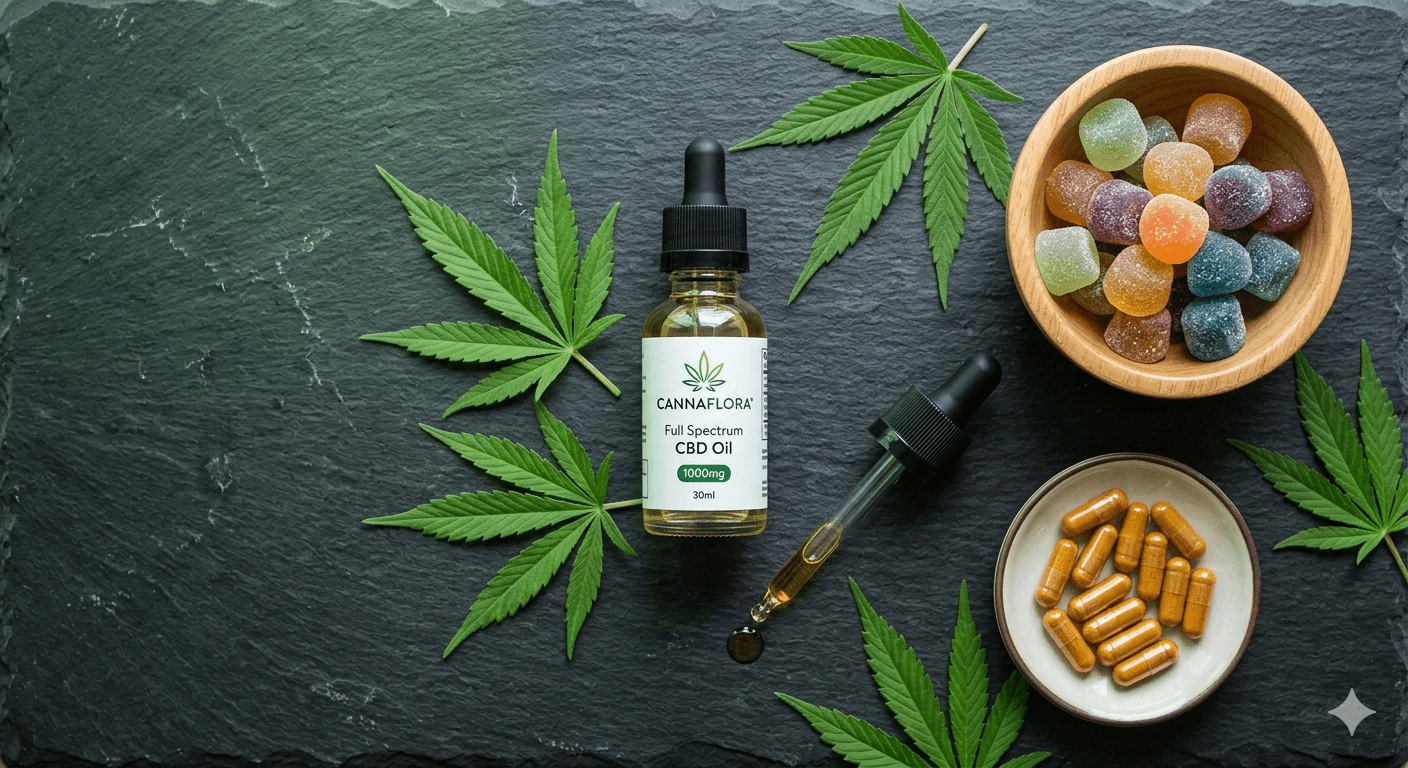
Consistent product quality. CBD products are agricultural in origin, which means batch-to-batch variation is real. A quality supplier manages this through controlled sourcing, standardized extraction, and proper quality assurance. You want your 1000mg tincture to actually contain 1000mg of CBD — every time, not just on the first order.
Broad product range. Your customers have different preferences. Some want gummies, some want flower, some want tinctures, and some are looking for topicals. A supplier who carries 5-8 product categories with multiple potencies and flavors gives you more flexibility than one who only stocks tinctures in three strengths. Look for vendors offering at minimum: tinctures, gummies/edibles, flower, pre-rolls, vape cartridges, and topicals.
Transparent pricing with reasonable minimums. Wholesale CBD pricing varies widely, but here are rough benchmarks for 2026. CBD tinctures (1000mg, 30ml) typically run $8-$15 wholesale, retailing for $25-$45. Gummies (30-count, 25mg each) cost around $6-$12 wholesale and sell for $20-$35. Flower runs $400-$800 per pound wholesale depending on quality, with pre-rolls at $1.50-$3.50 each. If a supplier's prices are dramatically below these ranges, question why.
Reliable shipping and stock availability. This one gets overlooked until it costs you money. A vendor who regularly goes out of stock on your bestsellers or takes 10+ days to ship is costing you sales every week. Ask about their fulfillment timeline, stock guarantees, and what happens when something's backordered.
Understanding COAs (Certificates of Analysis)
A Certificate of Analysis is the single most important document in the CBD supply chain. It's a lab report from a third-party testing facility that tells you exactly what's in a product — and what isn't.
Every COA should include the cannabinoid profile (CBD, THC, CBG, CBN, and other cannabinoids present), potency per serving and per package, and whether the product passes or fails on contaminants. The contaminant panels you want to see are pesticides, heavy metals (arsenic, cadmium, lead, mercury), residual solvents, and microbial testing for mold, yeast, E. coli, and salmonella.
Here's the counterintuitive part: a COA that shows slightly lower potency than the label claims isn't necessarily a red flag. Industry-wide, around 10-15% variance is common due to natural batch variation. A 1000mg tincture testing at 920mg is within normal range. What IS a red flag is a product that tests significantly over its label claim — say, a "500mg" tincture testing at 750mg. That suggests the manufacturer isn't controlling their process.
How to read a COA in 60 seconds. Look at four things:
- Lab name and accreditation. The lab should be ISO 17025 accredited. Google them. If you can't find the lab, the COA might be fabricated.
- Date. COAs older than 12 months are questionable. Older than 18 months, don't accept them.
- Delta-9 THC content. Must be below 0.3% by dry weight to comply with federal law. Even 0.31% makes it illegal marijuana under federal definitions.
- Pass/fail on contaminant panels. Any "fail" result on pesticides, heavy metals, or microbials is a hard no.
Ask your supplier to send COAs proactively with every shipment. If you have to chase them down every time, that tells you something about how seriously they take compliance.
Legal Considerations — the 2018 Farm Bill and Beyond
The 2018 Farm Bill legalized hemp and hemp-derived products at the federal level, defining legal hemp as cannabis containing less than 0.3% delta-9 THC by dry weight. That's the foundation of the entire CBD industry. But it's not the whole picture.
Federal law sets the floor, not the ceiling. Individual states can — and do — impose additional restrictions on CBD and hemp products. Some states restrict certain product types (like smokable hemp flower), some require state-level licensing for retailers, and some have specific labeling or testing requirements that go beyond federal standards .
The 2023 Farm Bill revision added clarification around delta-8 THC, THCA, and other minor cannabinoids derived from hemp. The rules around these compounds vary significantly by state, and enforcement is active in some markets. If you're stocking anything beyond straightforward CBD isolate or broad-spectrum products, you need to understand your specific state's stance .
What this means for choosing suppliers. Your wholesale CBD supplier should be able to confirm that every product they sell complies with the 0.3% THC threshold and comes with documentation to prove it. They should also be aware of destination-state restrictions and flag any products that can't legally be shipped to your location.
A good supplier will maintain COAs showing compliant THC levels, provide clear labeling that meets FDA and state requirements, carry proper business insurance, and have legal counsel reviewing their product lines. A great supplier will proactively notify you about regulatory changes that affect their products.
For shops in major hemp-producing states, you'll find a strong concentration of wholesale suppliers in California who tend to be well-versed in compliance requirements.
Questions to Ask Before Placing Your First Order
Don't place a bulk order with any CBD supplier until you've gotten clear answers to these questions. A good vendor won't be annoyed by them — they'll be impressed you're doing your homework.
"Can you send me current COAs for every product I'm considering?" The answer should be an immediate yes. If they hesitate, make excuses, or say they'll "get back to you," that's all you need to know.
"What's your return or exchange policy for defective or non-compliant product?" Some suppliers accept returns on defective or mislabeled product. Others don't. Know this before you're stuck with $2,000 worth of gummies that taste like dirt.
"Where is your hemp sourced?" US-grown hemp is generally preferred. Not because imported hemp is automatically bad, but because US-grown product from licensed farms is subject to USDA oversight and state agricultural department inspections. Imported hemp can be excellent, but the supply chain is harder to verify.
"What's your average fulfillment time?" Anything under 5 business days is solid. Over 7 days consistently is a problem, especially for fast-moving SKUs.
"Do you offer sample packs?" Most reputable CBD wholesalers offer sample or starter packs at reduced minimums so you can test products before committing to a large order. If a supplier insists on a $5,000 minimum with no sample option, consider that a warning sign.
"How do you handle product recalls or compliance issues?" This one separates the professionals from everyone else. A mature supplier has a documented process for pulling product and notifying retail partners if a testing or compliance issue comes up.
"Can you provide proof of insurance?" Product liability insurance is essential for any CBD supplier. If a customer has a reaction to a product you sold, and your supplier doesn't carry insurance, the liability chain leads straight back to you.
Red Flags to Watch For
After years of tracking this industry, here are the warning signs that consistently predict problems with a CBD wholesale supplier.
No COAs — or COAs that don't match the products. Some vendors will send you a generic COA that covers their "CBD line" rather than specific batch-level testing. That's not acceptable. Each product batch should have its own COA with a matching batch or lot number.
Prices that seem impossibly low. If a supplier is offering CBD gummies at $2 per 30-count bottle when the market rate is $6-$12, something's off. They might be using CBD isolate instead of the claimed full-spectrum extract, cutting potency, or using synthetic cannabinoids. Margins that look too good usually are.
Health claims on packaging or marketing. CBD products cannot legally make medical claims — no "cures anxiety," no "treats pain," no "FDA approved." If your supplier's packaging makes these claims, you're the one who'll face enforcement action when a state inspector visits your shop. The FDA hasn't approved CBD for any therapeutic use except Epidiolex .
Resistance to sharing business documentation. A legitimate CBD supplier should willingly provide their business license, hemp handler/processor license (if applicable in their state), product liability insurance certificate, and COAs. If asking for these documents creates friction, find another vendor.
Lack of proper packaging and labeling. Hemp-derived CBD products should clearly display total CBD content per package and per serving, ingredients list, batch or lot number linked to a COA, a QR code or URL to access lab results, and the manufacturer's name and contact information. Missing any of these is a compliance risk.
No online presence or verifiable reviews. In 2026, a wholesale CBD company with no website, no reviews, and no visible industry presence is suspicious. Check for them on directories like SmokeAxis's supplier listings, look for reviews from other retailers, and verify their business registration.
FAQ
How much inventory should I order for my first CBD purchase?
Start small. A typical first order runs $500-$1,500, which gives you enough variety to test customer response without overcommitting. Order 2-3 units of each SKU rather than 20 of one product. Once you see what moves in your specific market — and it varies a lot by location — scale up your bestsellers. Most suppliers offer better per-unit pricing at higher quantities, so you'll naturally improve your margins as you grow.
What CBD products have the best margins for smoke shops?
Gummies and edibles consistently deliver the highest margins, typically 80-120% markup at retail. Pre-rolls and flower offer solid margins of 60-100% but move faster, so you're restocking more often. Tinctures have decent margins (50-80%) but slower sell-through in most shops. Topicals are high-margin but low-volume in a smoke shop setting — they sell better in wellness-focused stores. Your best bet is anchoring around gummies and flower, then filling in with tinctures and vape products.
Is it better to buy CBD from a single supplier or multiple vendors?
Multiple vendors, without question. Working with 2-3 suppliers gives you leverage on pricing, protects you if one supplier has stock issues, and lets you offer a broader product range. That said, don't spread yourself across 10 vendors for a small shop — the logistics and relationship management aren't worth it. Start with two: one for your core CBD line (tinctures, gummies, topicals) and one for flower and pre-rolls. Add a third if you're stocking specialty items like minor cannabinoids.
Do I need a special license to sell CBD in my smoke shop?
It depends entirely on your state. Some states require a specific hemp retail license or permit. Others allow CBD sales under a general retail or tobacco license. A few states restrict the sale of certain hemp products entirely — particularly smokable hemp flower. Check with your state's department of agriculture or commerce before stocking up . Your supplier should also be able to tell you about known restrictions in your state, but don't rely on them as your only source of legal information.
How do I know if a CBD product is actually full-spectrum vs. broad-spectrum vs. isolate?
The COA tells the story. A true full-spectrum product will show detectable levels of multiple cannabinoids (CBD, CBG, CBN, CBC, and trace THC under 0.3%). Broad-spectrum should show multiple cannabinoids but with THC at non-detectable levels. Isolate should show 99%+ CBD with virtually nothing else. If a product is labeled "full-spectrum" but the COA shows only CBD with no other cannabinoids present, the labeling is inaccurate — and that's a supplier you should reconsider doing business with.
Finding the right wholesale CBD and hemp suppliers takes some legwork upfront, but it pays off in product quality, customer trust, and margins that actually hold up over time. Start by checking COAs, verifying compliance, and asking the hard questions before you commit.
Ready to find verified CBD and hemp distributors? Browse wholesale CBD & hemp suppliers on SmokeAxis or search the full supplier directory to compare vendors in your area.